!! Heads up: this site is not optimized. !!
3 days. A lot of video. A heavy 3D file. A pitch.
I usually ship faster than this. Today the priority was the idea.
Two products, one system, three days. This site is the deliverable — the way I think, the level I ship at, and the kind of conversation I'd open in the first week as Creative Lead.
Everything you're about to see is built on assumptions — informed by my taste, by the references I'd reach for, and by what I could derive from the brief in three days.
The goal of this test isn't just to deliver the two icons asked for. It's to show how I work — the kind of thinking I'd bring into the room, the level of finish I'd commit to before showing something, and the way I'd frame a problem before solving it.
So treat what follows as a directional pitch, not a finished product. The visuals are 80% intention, 20% polish — the videos are generated, the photography is placeholder. What's real is the system underneath: the rules, the differentiation, the rationale.
If we agree on the thinking, the rest is execution.
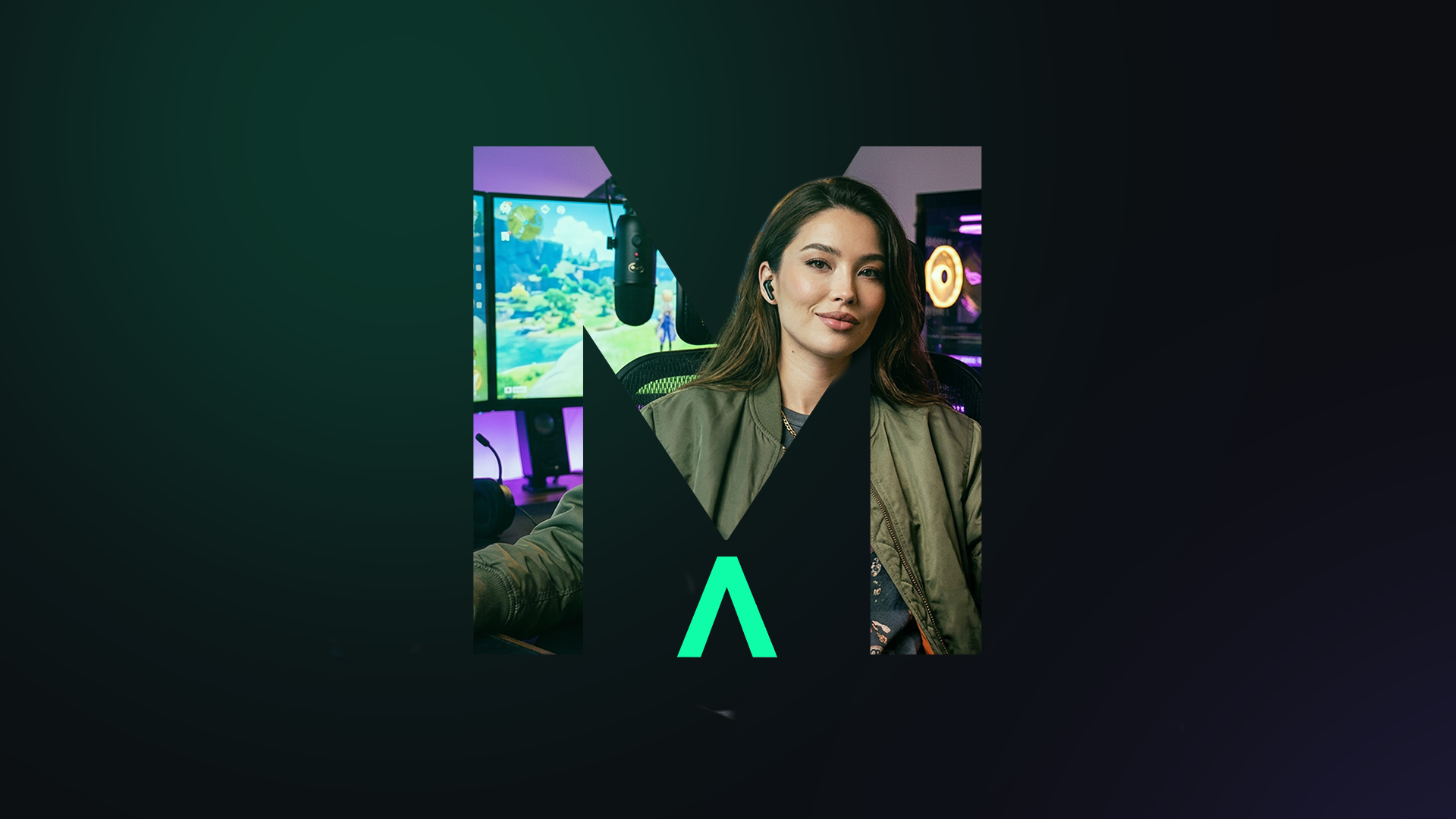
Not a chatbot. Not a mascot. A presence — the face you trust the way you trust the bartender who knows your drink. The icon is just a window. Maxine is what lives behind it.
01 · Mark
02 · Creator drop
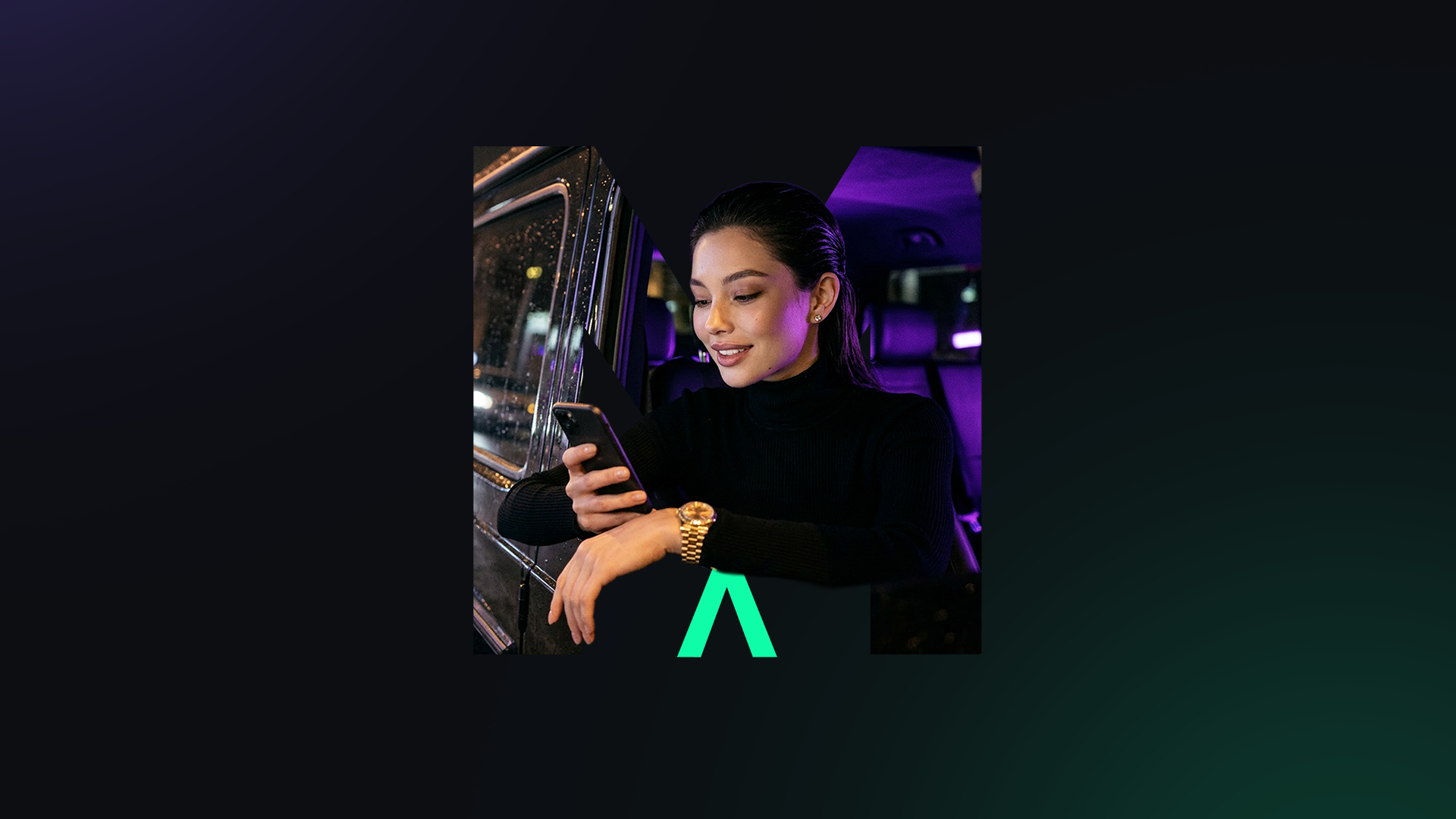
03 · After-hours drop
Maxine talks like the friend who knows the door guy — calm, sharp, half-smiling. She's read the room before you walked in.
A chat bubble is a utility. A presence is a brand. The first does a job; the second builds a relationship — and a creator-economy product lives on relationships.
The bubble pattern was invented for support tickets. It says: "need help?" Maxine doesn't help. She hosts. Different verb, different product.
The video pattern also lets HighStack treat the entry point as editorial real estate. The same floating card hosts a Halloween drop, a new-slot teaser, a seasonal mood — without ever redesigning the icon. It's the lowest-cost, highest-frequency surface on the entire product.
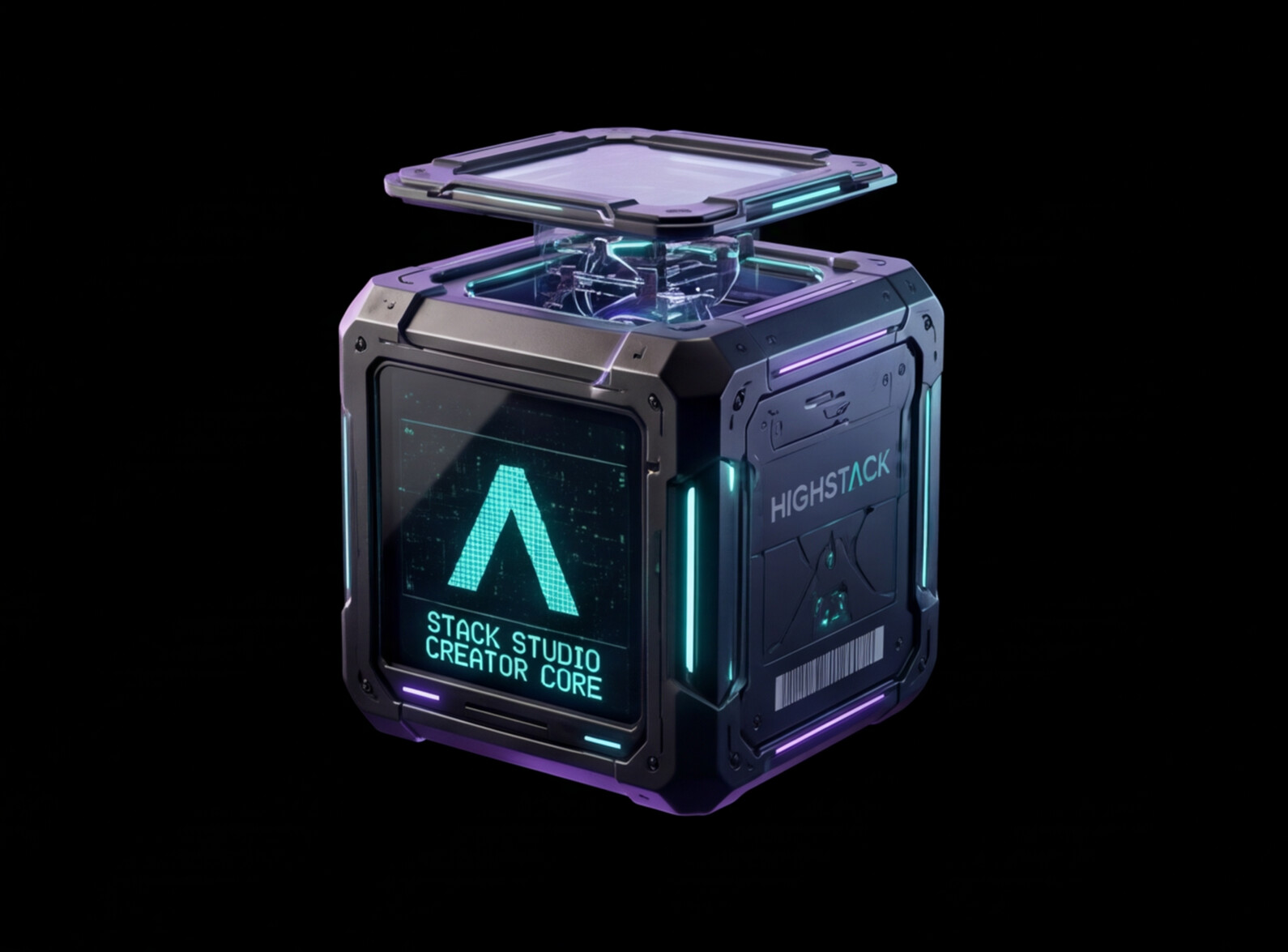
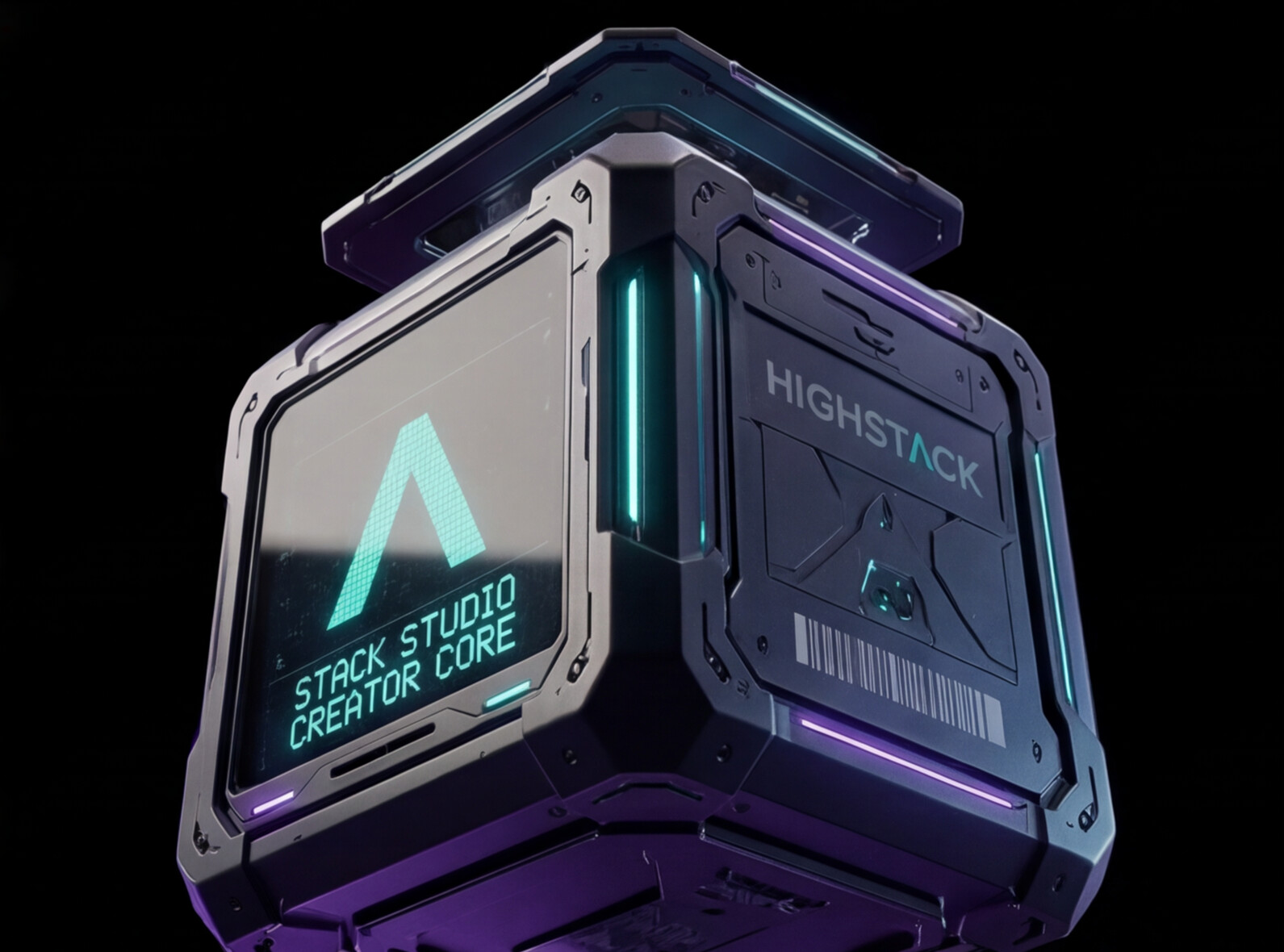
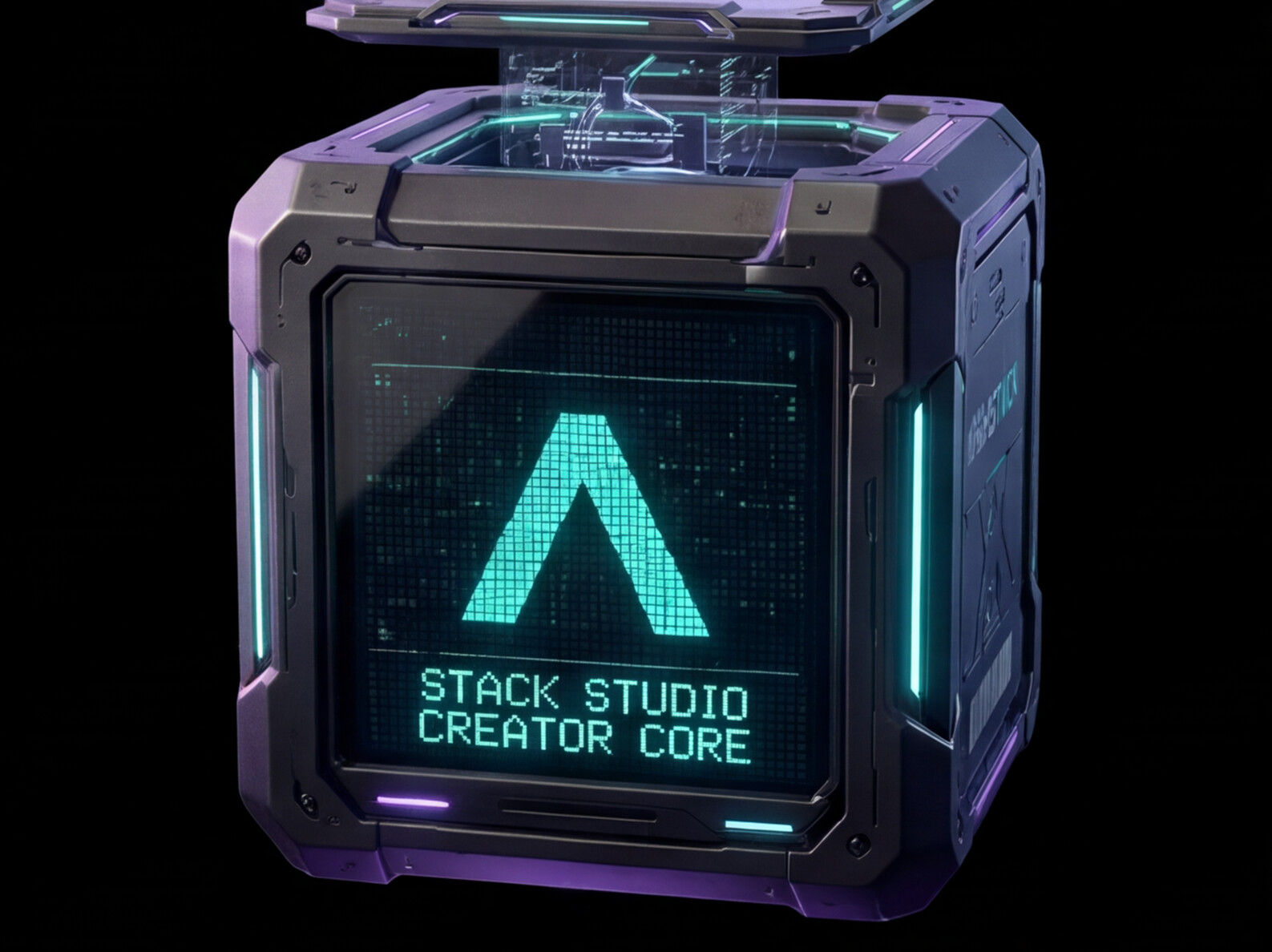
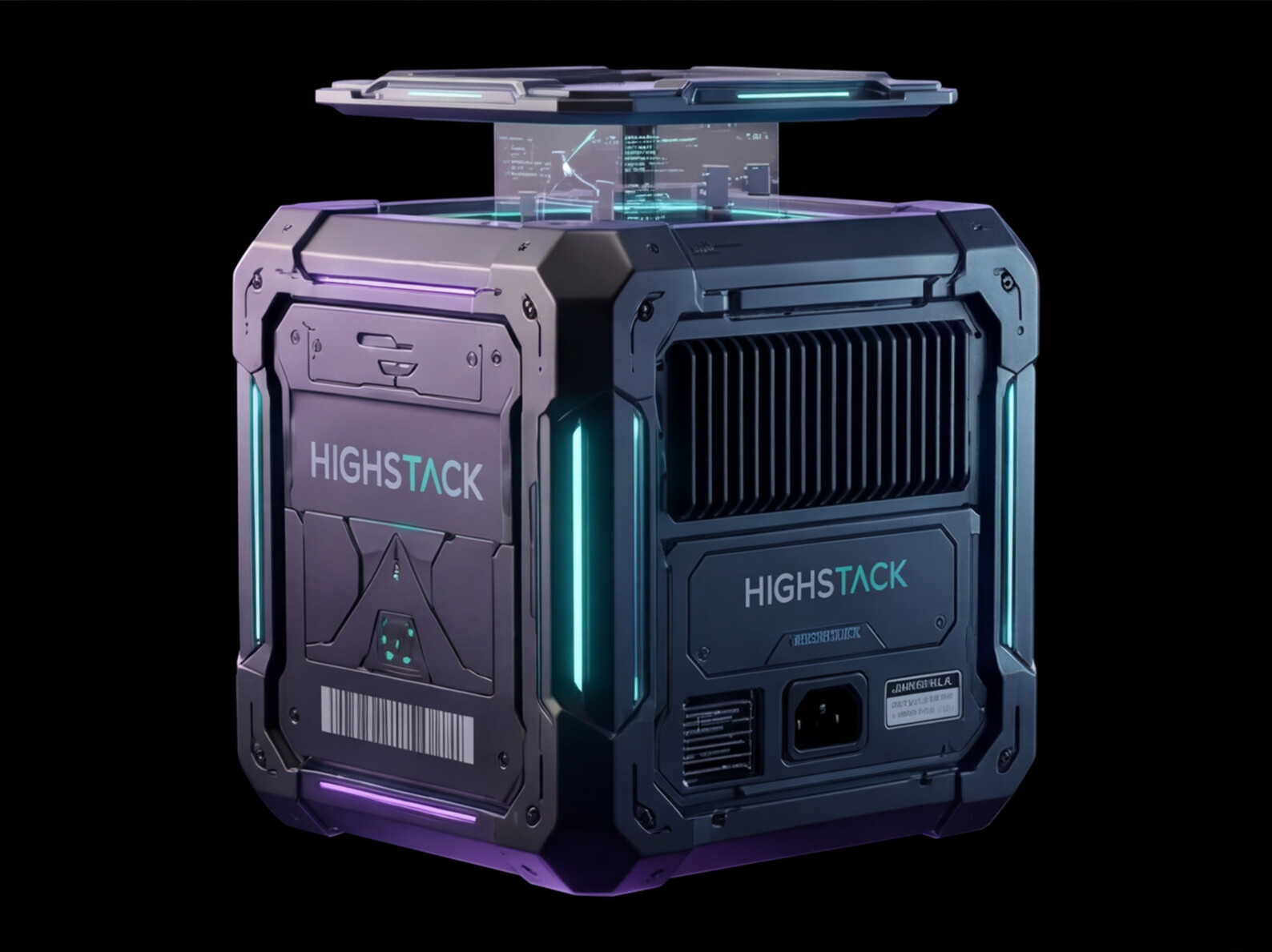
The brief asked for an icon. I'm delivering an object — a 3D Creator Rig the platform hands you when you sign up. The mark is the seal. The rig is the gift.
Most creator tools are workshops. Most casino platforms are pipelines. Stack Studio is an arsenal. The creator economy is closer to e-sports culture than to dev tools — and e-sports culture lives on loot boxes, drops, and unlocks.
So the deliverable for Project 02 isn't a flat glyph. It's a 3D Creator Rig: a piece of equipment the creator receives when they join the platform. It opens. It contains tools, templates, sounds, presets. It earns badges. It can be skinned for seasons and tournaments.
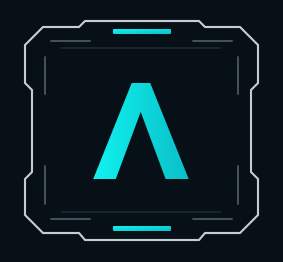
The flat icon below is the operational signature — the version that lives in the nav, the toast, the favicon. The rig is the cultural artifact. Same A-wedge, two scales.


The flat icon is the 2D companion to the rig — the version that survives at 16px, in monochrome, in a toast notification, in a Discord role.
The A-wedge sits inside a softened techwear frame. Same color logic as the HighStack mark — the green plays the wedge, the dark frame holds it. Coherent with Maxine's monogram at the system level: three marks, one family.
The flat is the working tool. The rig is the brand asset. They never compete.
The HighStack wedge anchors the brand. Maxine wears it inside the M. Stack Studio frames it inside the rig. Same green, same gesture, three contexts.
A pitch is only as good as its library. These are the rooms I walked through while making decisions — not to copy, but to know what I was choosing against.